
Practical guide

How to create an NFT collection that feels like one collection.

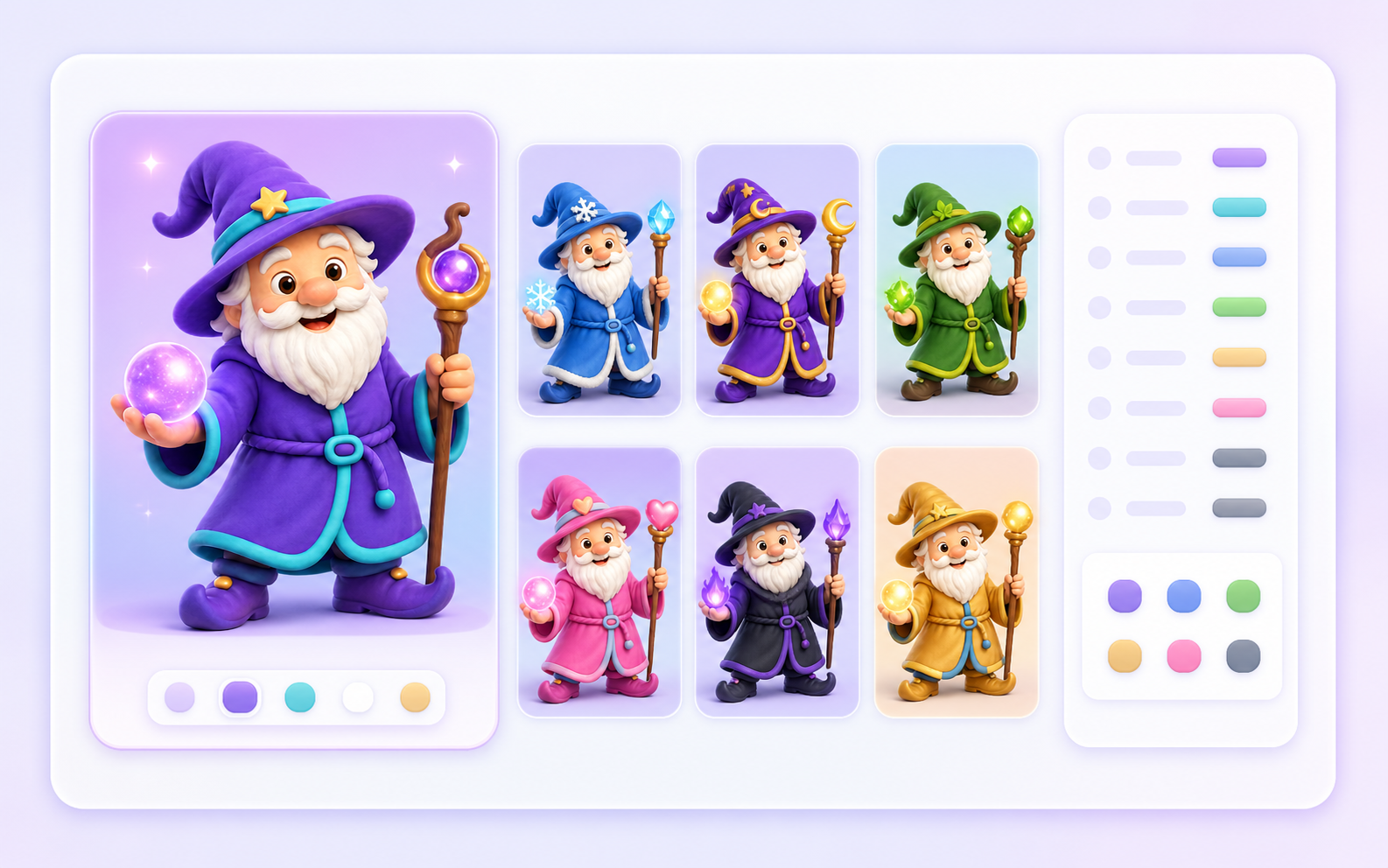
A strong collection is not a folder of unrelated images. It needs one visual direction, a base character, intentional traits and metadata that describe each piece.

Create a collection in NFTWizard →Example of a consistent NFT collection built from a base character
1. DefineSet an idea and visual language.
2. AnchorApprove the base character.
3. GenerateCreate variations, traits and metadata.
STEP 01

Give the collection a clear direction.

Start by deciding what should remain consistent: subject, visual style, framing and atmosphere. A short but specific direction makes later trait variation feel intentional rather than random.
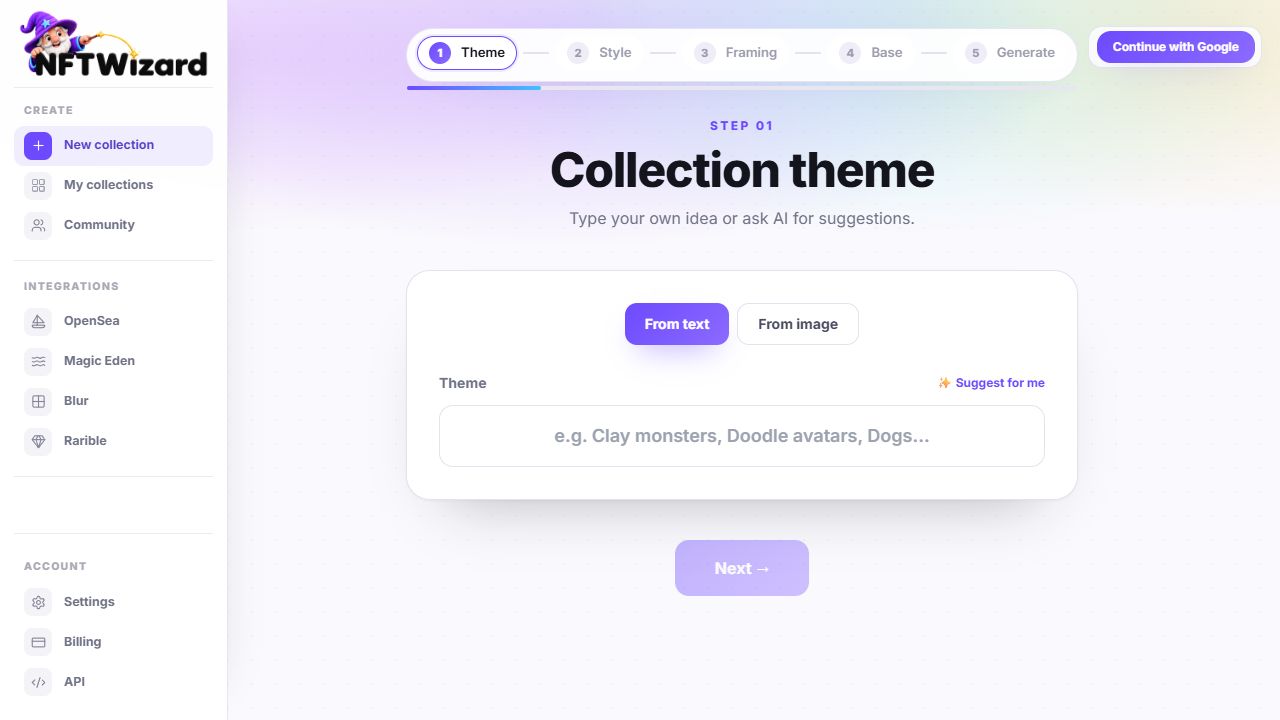
NFTWizard screen for defining a collection theme
Useful rule: choose one visual language before you generate a large set. Mixing styles inside one collection makes the output harder to recognise as a single drop.
STEP 02

Approve the character that anchors the set.

The base character is the reference point for silhouette, proportion and identity. It lets different outfits, accessories and backgrounds still read as the same collection.
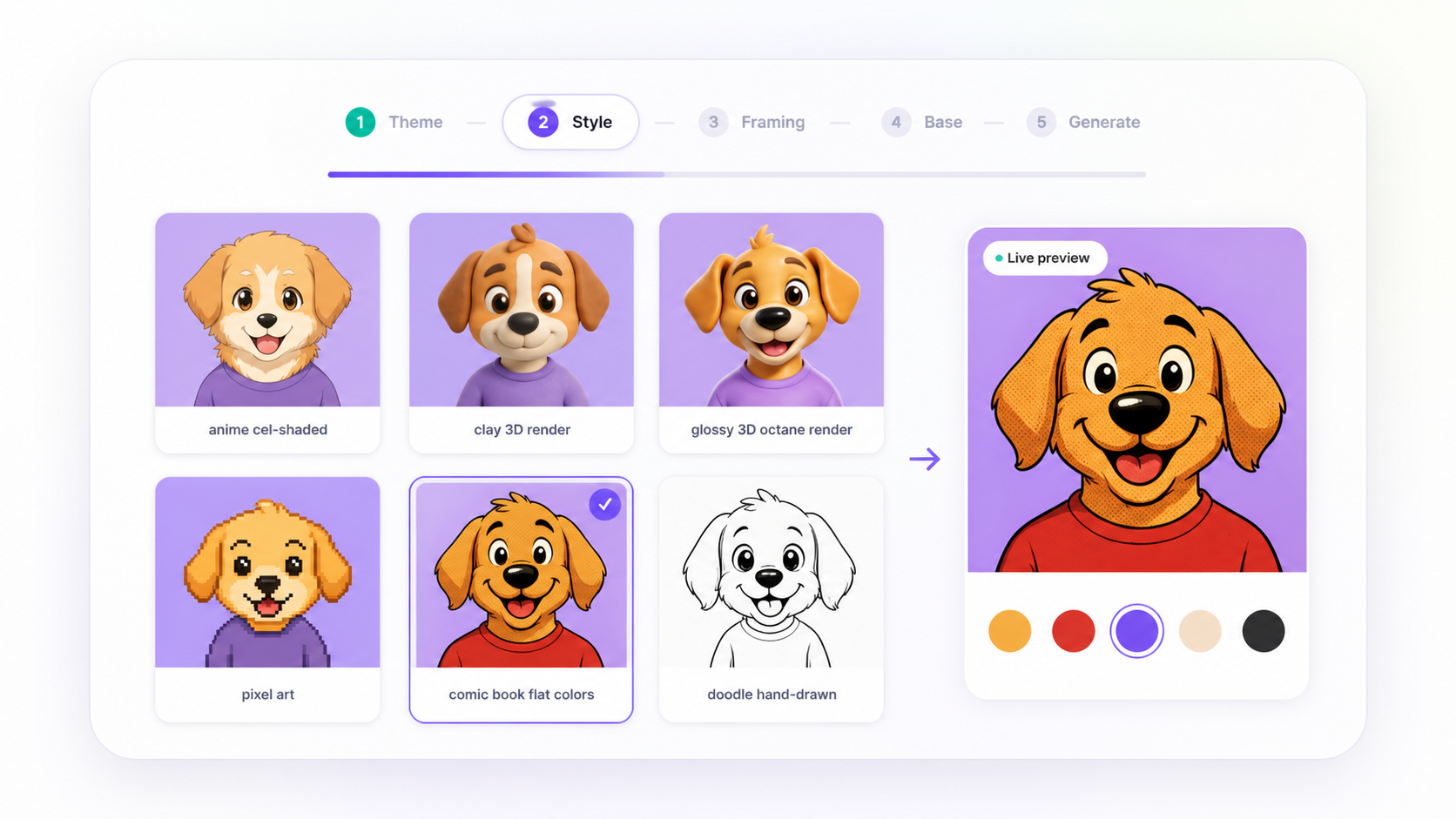
NFTWizard screen for selecting a visual style and base direction
STEP 03

Make traits do a job.

Traits work best when they describe visible, reusable dimensions: clothing, headwear, accessory, expression and background. Plan a small language of variation rather than adding random details to every image.

Keep trait names clear. A collector should understand what changed at a glance.
Use rarity intentionally. Reserve the most distinctive combinations for a small share of the collection.
Protect the visual anchor. Traits can vary; the character’s core identity should not.
STEP 04

Keep metadata with the artwork.

Metadata makes the collection usable beyond the image itself. It records each NFT’s trait values and lets marketplaces or your own tooling display the collection consistently.
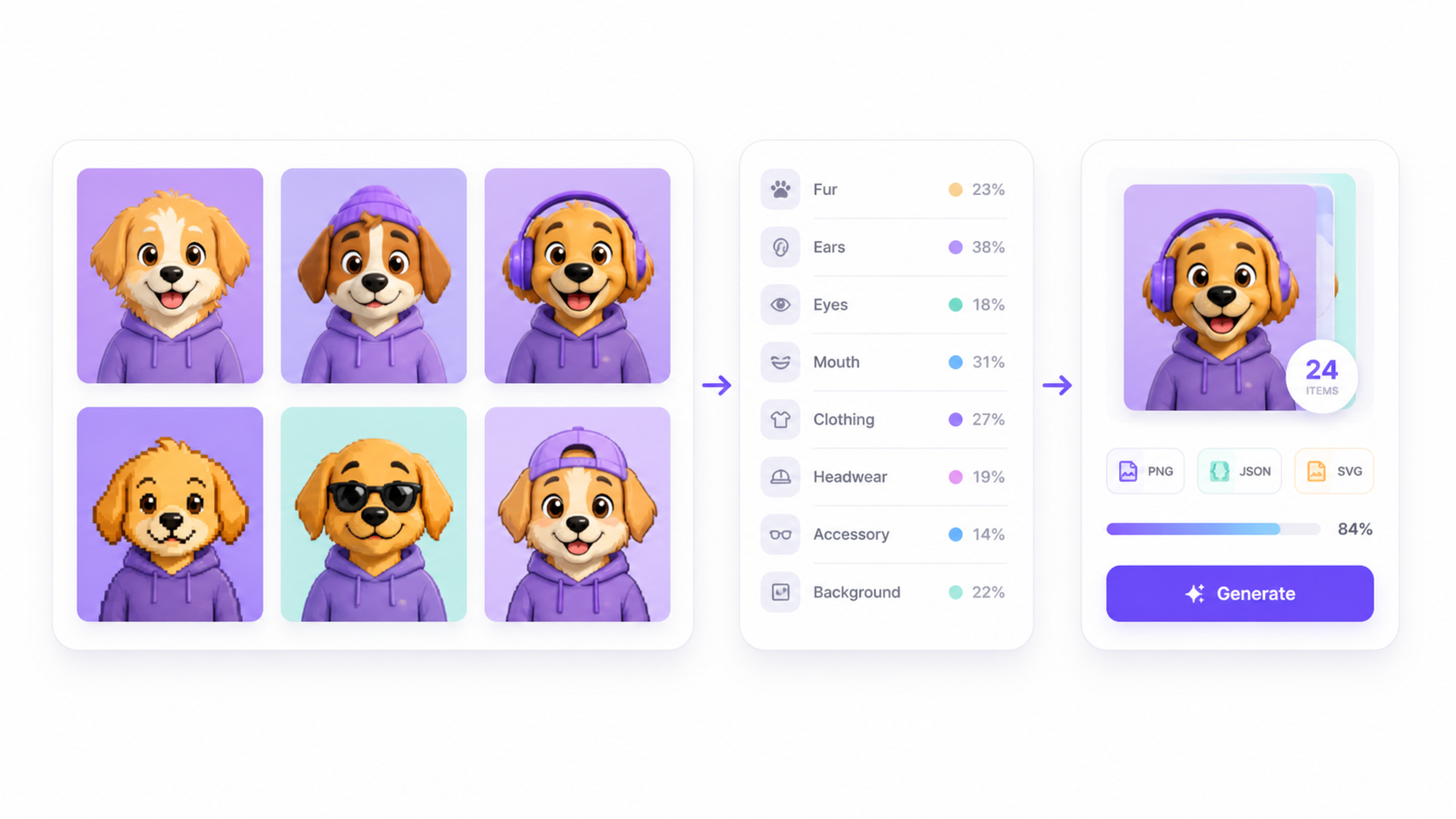
NFTWizard collection generation, trait and metadata workflow
Common questions

What creators ask before they start.

How many NFTs should be in a collection?

Start with the amount that fits your creative and launch plan. Consistency and a clear trait system matter more than choosing a large number first.

Do I need to draw every NFT by hand?

No. A guided generation workflow can help you create related artwork while keeping the base character and visual direction aligned.

What makes an NFT collection consistent?

A shared character anchor, stable framing and one visual language. Traits should change details, not replace the identity of the collection.

Why does metadata matter?

Metadata associates visible traits with each NFT, making rarity and collection information easier to use in the next stage of your workflow.

Ready to start

Turn the guide into a collection.

Create my collection →