✦
Trait values that match the artwork
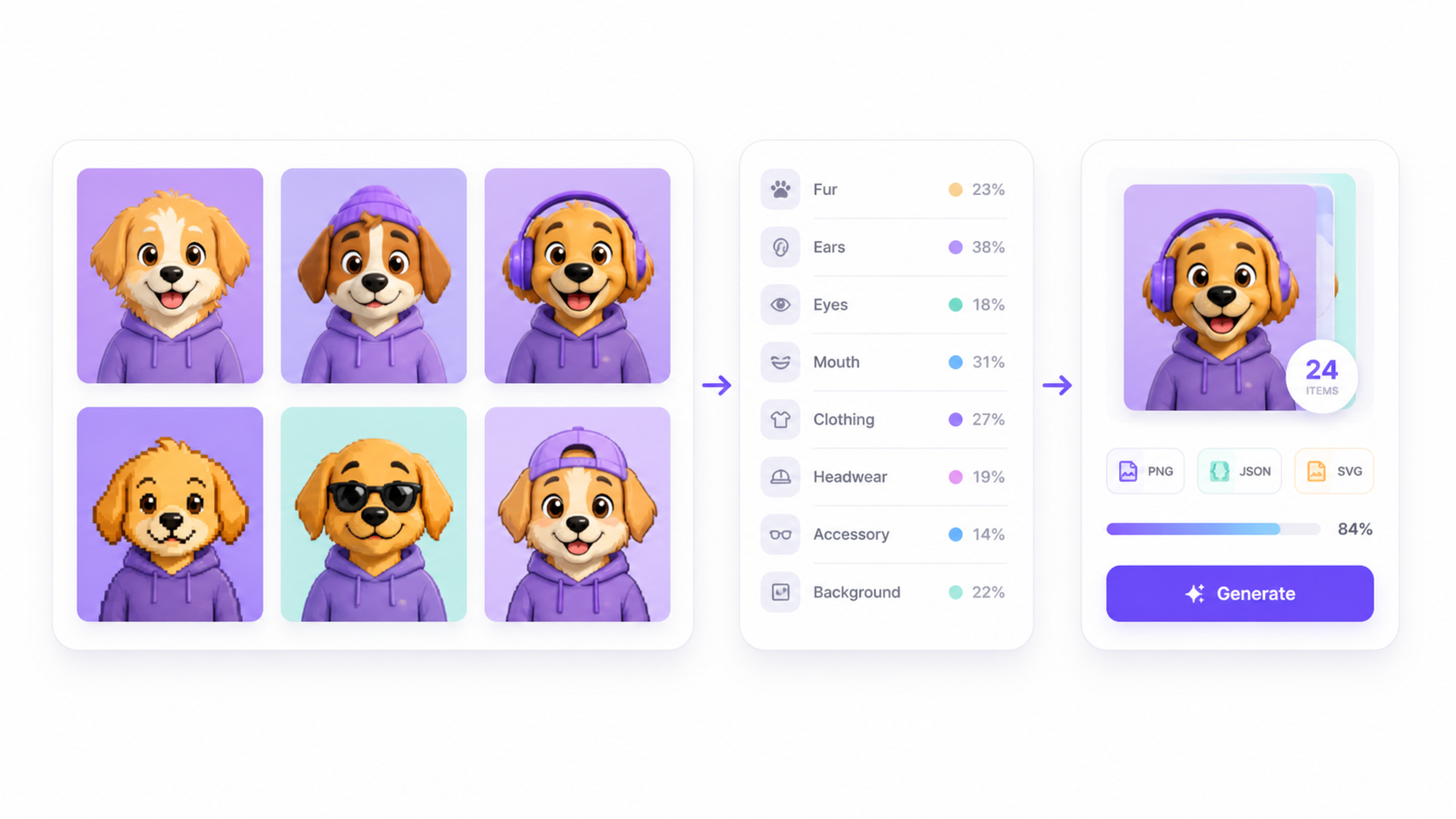
Keep named attributes tied to visible collection changes such as outfits, accessories, expressions and backgrounds.
 Open the app →
NFTWizard generates collection artwork, visible traits, rarity and structured metadata together—so your output does not need a separate production step.
Create my collection →Traits and collection files stay connected in one workflow.
{
  "name": "Moonlit Wizard #0001",
  "description": "Part of the Moonlit collection.",
  "attributes": [
    { "trait_type": "Outfit", "value": "Star Robe" },
    { "trait_type": "Background", "value": "Twilight" },
    { "trait_type": "Rarity", "value": "Rare" }
  ]
}
The best metadata is not something pasted on at the end. It reflects the visual decisions that make the collection understandable to people and downstream tools.
Keep named attributes tied to visible collection changes such as outfits, accessories, expressions and backgrounds.
Make uncommon combinations intentional, so rarity is easier to explain and inspect across the collection.
Download the generated collection files when the workflow is complete instead of assembling every record manually.
When traits are planned while building the collection, they remain legible in the artwork and useful in the metadata.
NFT metadata is structured information associated with an NFT, such as its name, description and visible attributes. It helps collection information be displayed and understood consistently.
Yes. NFTWizard includes traits, rarity and metadata alongside the generated collection artwork.
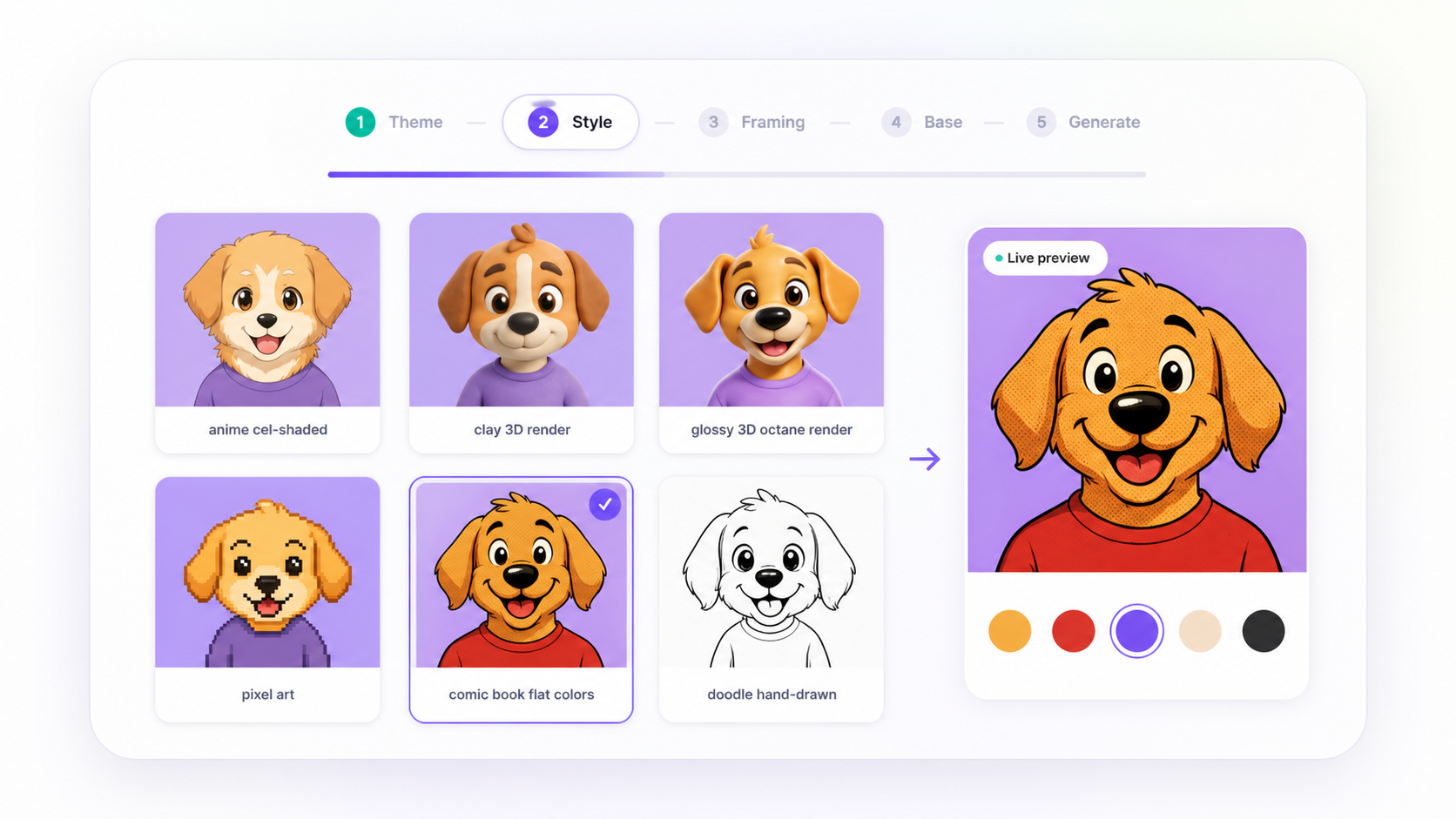
The collection workflow gives you the visual direction and base character first, then uses collection traits and variations as part of the generation flow.
NFTWizard is designed as a collection workflow. Metadata is produced as part of creating a consistent collection, rather than as a disconnected form.