01 · PROTECT IDENTITY
Keep the character anchor.
Let clothes, backgrounds and accessories vary—but protect the silhouette, framing and core character that makes the set recognisable.
 Open the app →
A trait system gives a collection its vocabulary. It tells people what can change, what stays recognisable, and which combinations deserve to be uncommon.
Create a collection →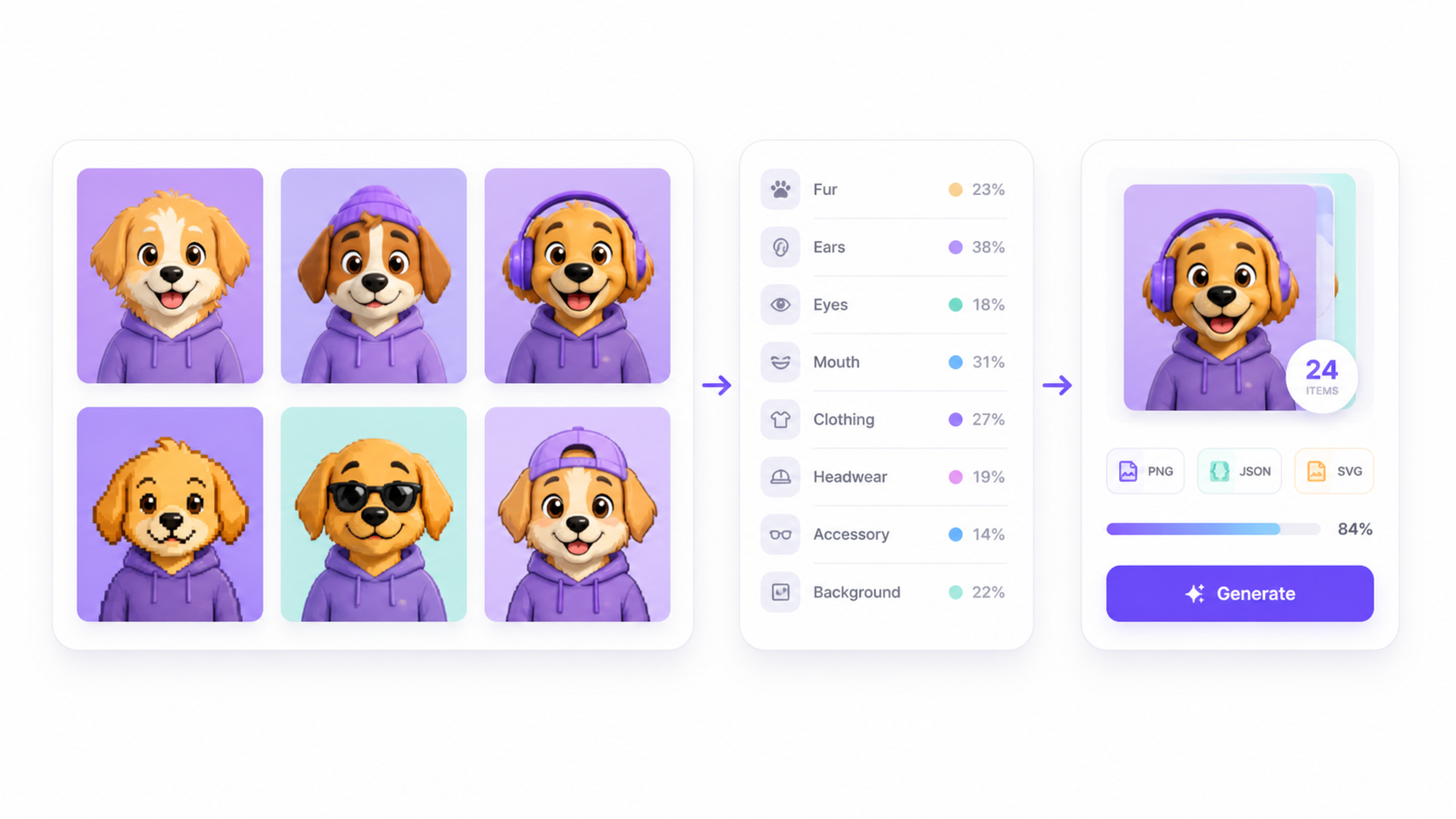
Traits should be obvious in the final image, useful in metadata, and narrow enough that the collection still feels like it belongs together.
Let clothes, backgrounds and accessories vary—but protect the silhouette, framing and core character that makes the set recognisable.
Names such as Outfit, Background or Headwear are easier to inspect than vague internal labels or overcomplicated categories.
Rarity feels more meaningful when it comes from a deliberate visual change or a memorable combination—not a random percentage alone.
Plan traits in the same workflow as the character and collection direction, then retain those attribute values with the final collection files.
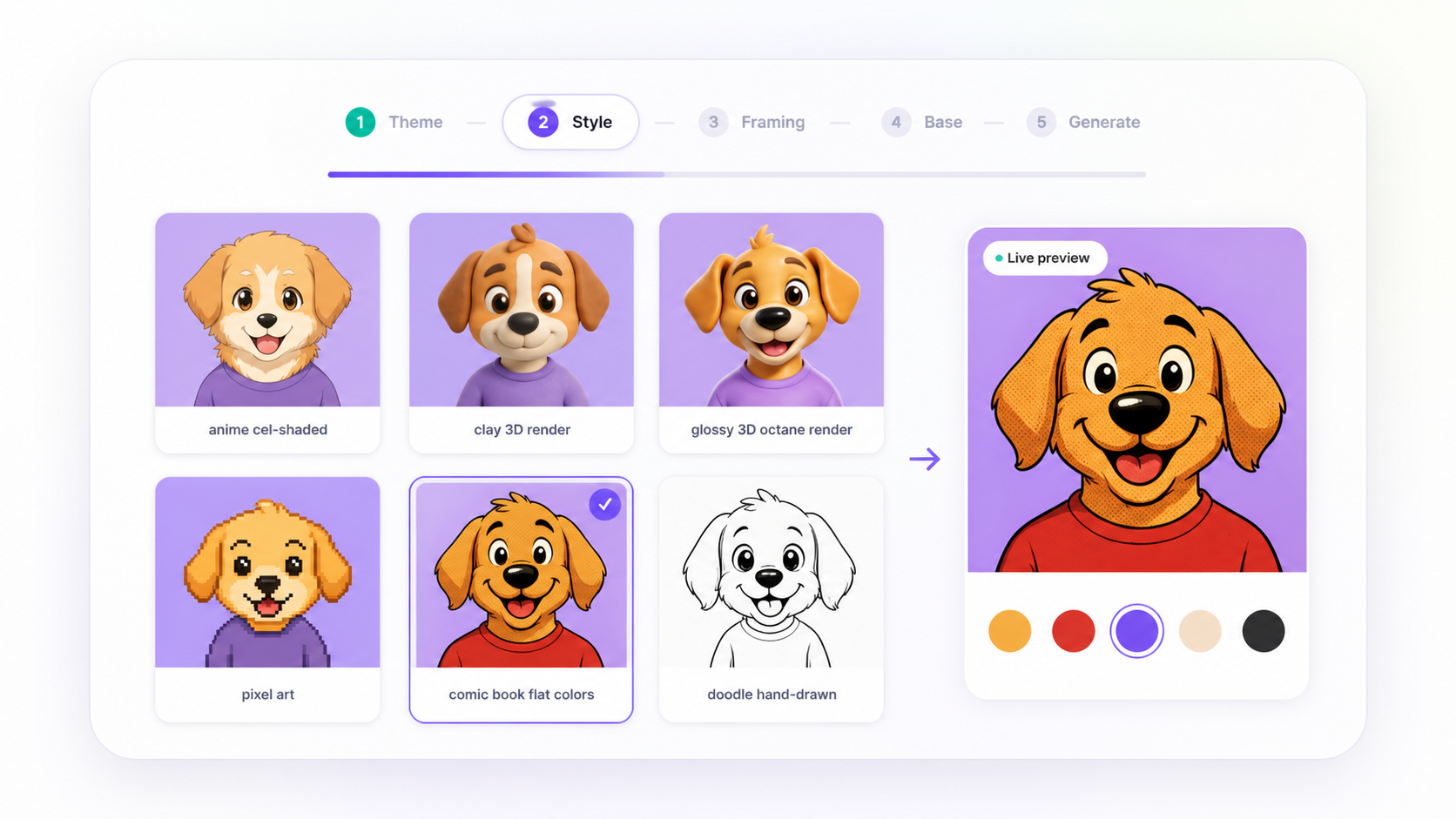
Traits are named characteristics associated with an NFT, such as an outfit, accessory, expression or background. They make collection variations easier to identify.
A good trait is visible, clearly named and reusable across the collection. It changes the piece without replacing its core identity.
Use rarity to make distinctive combinations less common. It works best when the rarer result has a clear visual reason to stand out.
Yes. NFTWizard keeps traits, rarity and metadata connected to the collection generation workflow.